
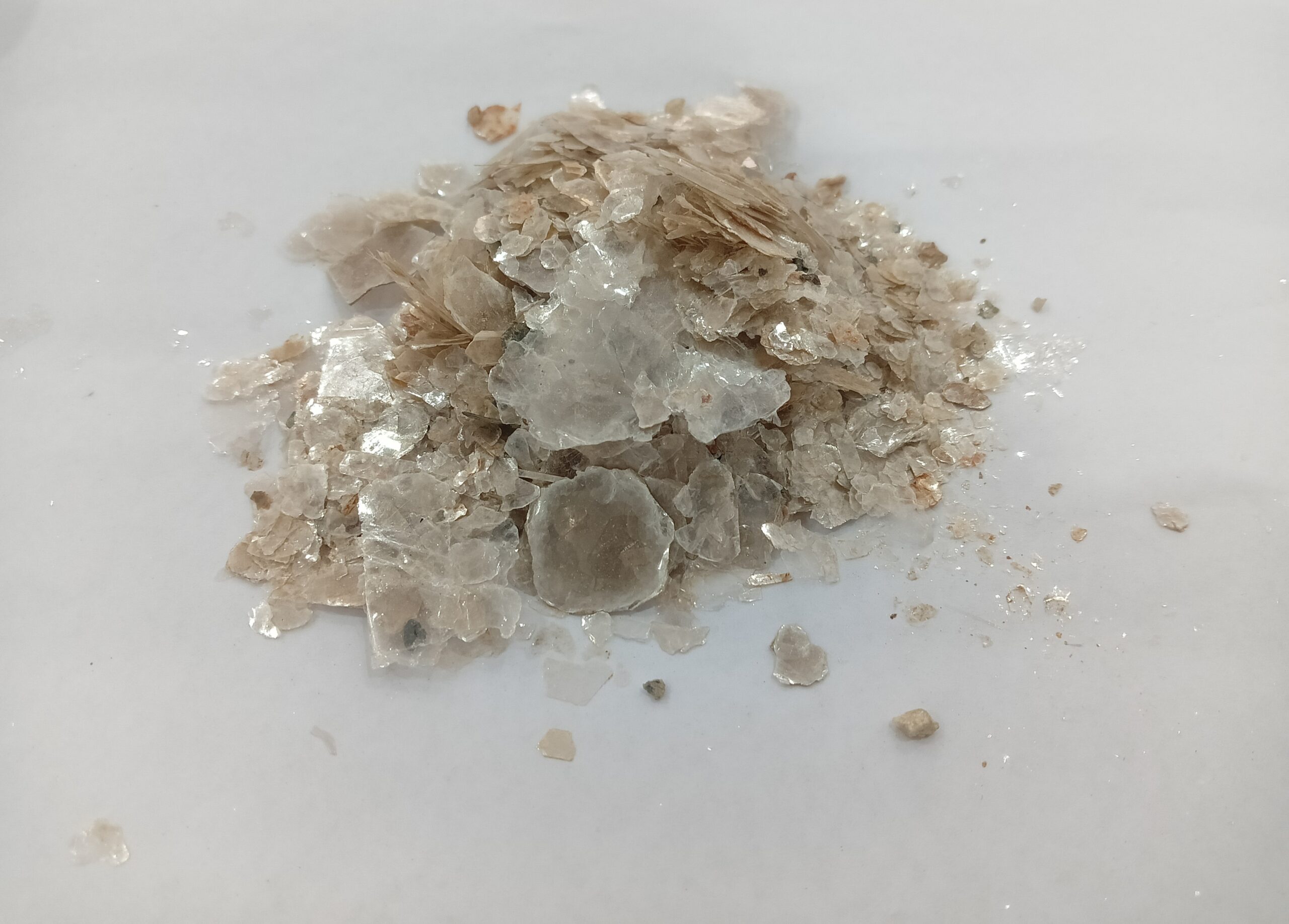
Introduction of Mica
MICA, a group of silicate minerals renowned for their exceptional industrial value and unique physicochemical properties, plays a pivotal role in diverse fields such as geological research and materials science. This blog delves into two representative members of the mica family—Phlogopite and Muscovite, offering a comprehensive insight into these commonly encountered mica minerals.
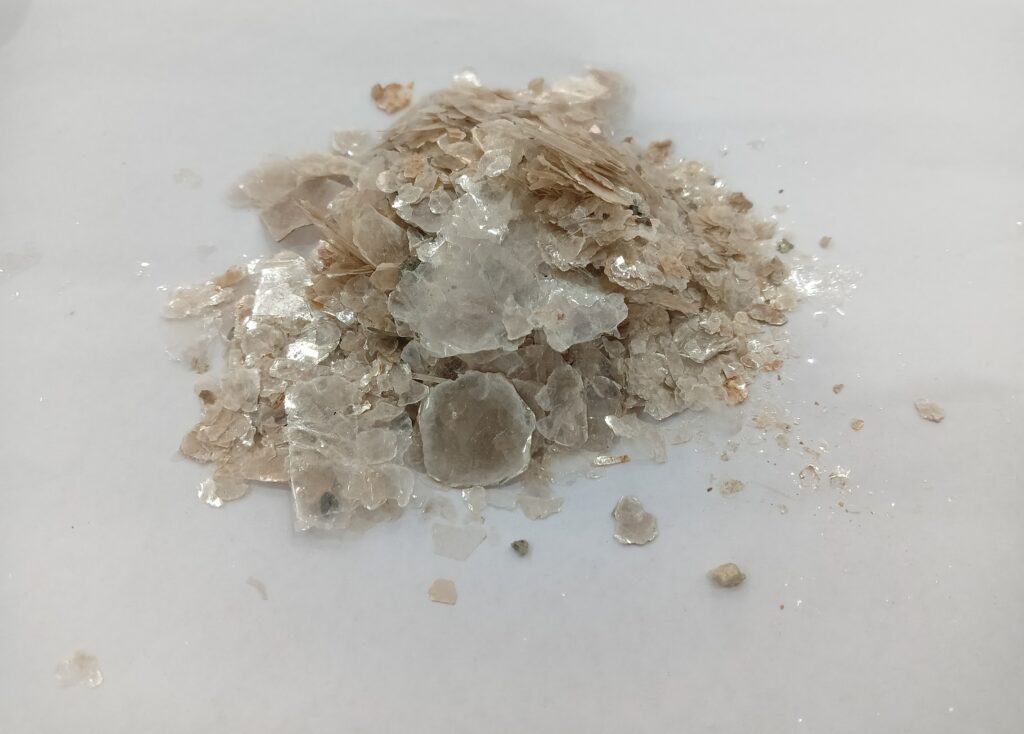
Phlogopite Mica: The Heat-Resistant “Industrial Expert”
The term “Phlogopite” traces its roots to the Greek language, with its naming presumably linked to its appearance or discovery. As a key member of the mica family, Phlogopite boasts distinct characteristics.
In terms of appearance, Phlogopite typically exhibits attractive hues of golden yellow, brown, or dark brown—attributes that have earned it the moniker “golden mica.” It features a typical layered structure, which endows it with excellent cleavage. When struck or peeled off in specific directions using tools, it yields thin, elastic flakes with smooth surfaces and a certain luster.
In terms of physicochemical properties, Phlogopite’s most prominent advantage lies in its outstanding high-temperature resistance. It can maintain stable physicochemical properties in relatively high-temperature environments, resisting decomposition, deformation, and other undesirable changes. This property makes it widely applicable in high-temperature industrial scenarios. For instance, in the metallurgical industry, Phlogopite is frequently used as a refractory material to manufacture components such as furnace linings and thermal insulation boards, effectively withstanding the intense heat inside smelting furnaces. Additionally, its good electrical insulation performance allows it to serve as an insulating material in some high-temperature electrical equipment, ensuring the safe and stable operation of the equipment.
Muscovite Mica: The Versatile “Multifunctional Player”
Similar to Phlogopite, the etymology of “Muscovite” (also known as common mica or potash mica) is connected to historical and regional factors. As one of the most widely distributed mica minerals in nature, Muscovite has won extensive recognition for its versatile properties.
In terms of appearance, Muscovite differs significantly from Phlogopite. It usually presents colors such as colorless, pale gray, light brown, or light green. Its flakes are relatively thin and transparent, and when observed under light, they can transmit light to a certain extent, giving it an elegant and delicate appearance. Like other mica minerals, Muscovite also has a distinct layered structure and excellent cleavage, enabling it to be peeled into ultra-thin flakes that are both flexible and tough.
In terms of physicochemical properties, Muscovite excels in excellent electrical insulation, thermal insulation, and chemical stability. These properties make it a versatile material across multiple industries. In the electrical and electronic industry, Muscovite is a crucial insulating material, widely used in the production of capacitors, transformers, and electrical appliances. Its high electrical insulation ensures effective isolation of current, preventing short circuits and other faults. In the construction industry, Muscovite flakes are added to coatings and paints to enhance the durability, weather resistance, and decorative effects of the coatings. Moreover, in the field of cosmetics, finely ground Muscovite powder is utilized as an additive in products such as foundations and eye shadows, imparting a subtle shimmer and smooth texture to the cosmetics.
Conclusion
Both Phlogopite and Muscovite, as important members of the mica family, showcase unique characteristics and extensive application value. Phlogopite shines in high-temperature industrial fields with its exceptional heat resistance, while Muscovite demonstrates its versatility in the electrical, construction, and cosmetic industries through its excellent comprehensive properties. The exploration and utilization of these mica minerals not only drive the development of related industries but also highlight the profound significance of mineral resources in promoting technological progress and improving people’s lives. As research continues to advance, it is believed that more potential applications of Phlogopite, Muscovite, and other mica minerals will be unlocked, bringing greater surprises to various fields.